Hohlraumerhaltung

Vorrichtungserhaltungsbetrieb
Die Programmierung eines Werkzeugwegs zur Kavitätserhaltung erzeugt im Wesentlichen einen punktbasierten Zyklus, d. h. eine Operation, die aus drei Abschnitten besteht:

Anfahrt (außerhalb des Prozesses)
Erhaltungsposition (im Prozess)
Rückzug (außerhalb des Prozesses)
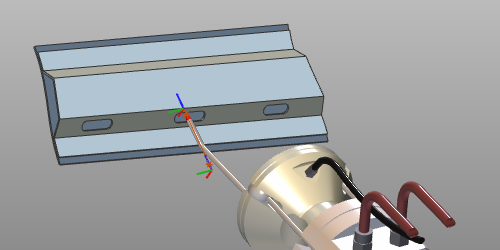
Der Erhaltungszyklus wird durch die Programmierattribute und -ereignisse berechnet und gesteuert.
Programmierattribute
Die Anzeige der Programmierattribute in den Dashboards Programmierstandards und Aktives Programm wird in einer Settings.xml-Datei definiert. Bei einer Standardinstallation befindet sich eine Standarddatei im Pfad <install>\E2Plugin\Technologies\CavityConservationTechnology\Standard\ControllerSettings.
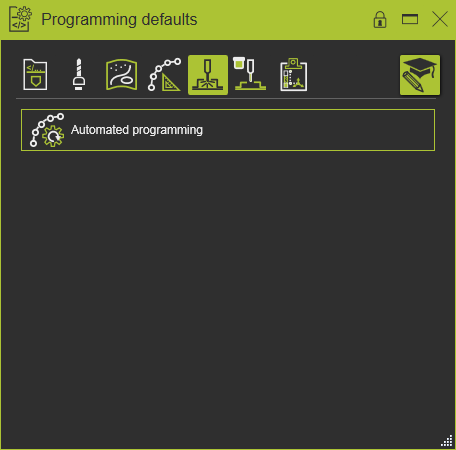
Die folgenden generischen Attribute wurden definiert.
| Tech-Registerkarte | Behälter | Attribut | Beschreibung |
|---|---|---|---|
 Program base Program base | |||
 Tool data Tool data | |||
 Manufacturing geometry Manufacturing geometry | |||
 Toolpath calculation Toolpath calculation | |||
| Technology base | |||
 Cavity preservation Cavity preservation | |||
 Toolpath quality Toolpath quality |
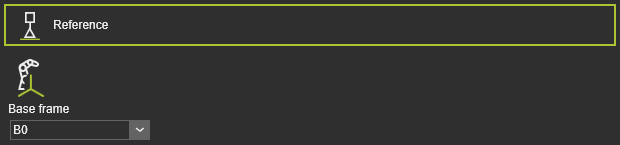 | Die Programm-Referenzinformationen. |
| Basisrahmen | Der Bezugsrahmen des Programms. |
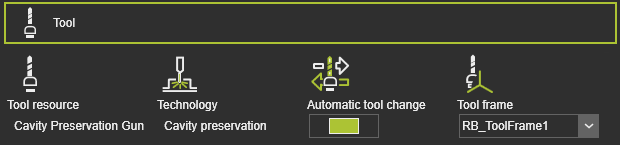 | Werkzeuginformationen. |
| Werkzeugressource | Der Name des Werkzeugs. |
| Technologie | Die angewandte Technologie. |
| Automatischer Werkzeugwechsel | |
| Werkzeugkoordinatensystem | Der Werkzeugrahmen, der den Werkzeugweg ausführt. |
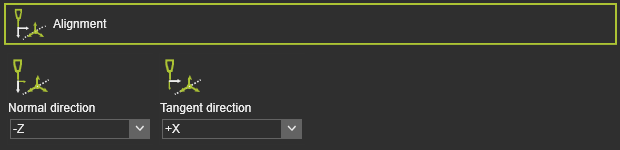 | Die Zuordnung der Werkzeugachsen zu den entsprechenden Vektoren der Prozessgeometrie. |
| Normale Richtung | Die Ausrichtung der Z-Achse des Werkzeugkoordinatensystems mit der Normalenrichtung der Prozessgeometrie. |
| Tangentialrichtung | Die Ausrichtung der X-Achse des Werkzeugkoordinatensystems an der Tangentialrichtung der Prozessgeometrie. |
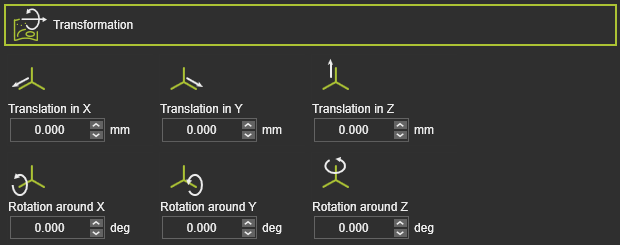 | Die globale Transformation der Fertigungsgeometrie. |
| Translation in X,Y,Z | Die globale Translation in X-, Y- oder Z-Richtung. |
| Rotation um X, Y, Z | Die globale Rotation um die X-, Y- oder Z-Achse. |
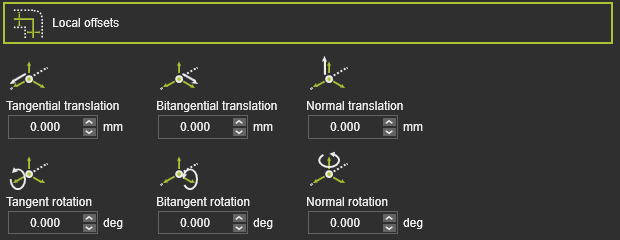 | Der Versatz des Werkzeugweg-Elements von seiner ursprünglichen Position auf der Fertigungsgeometrie. |
| Tangentiale Translation | Die Verschiebung eines Werkzeugbahn-Elements in seiner Tangentialrichtung. |
| Bitangentiale Verschiebung | Die Verschiebung eines Werkzeugbahn-Elements in seiner bi-tangentialen Richtung. |
| Normale Translation | Der Versatz eines Werkzeugbahn-Elements in seiner Normalrichtung. |
| Tangentialdrehung | Die Rotation des Werkzeugbahn-Elements um seinen Tangentialvektor |
| Rotation um den Bitangentenvektor | Die Rotation des Werkzeugbahn-Elements um seinen Bi-Tangenten-Vektor. |
| Normale Rotation | Die Drehung des Werkzeugbahn-Elements um seinen Normalenvektor. |
 | Zusätzliche (Optimierungs-)Bedingungen zur Berechnung des Werkzeugwegs. |
| Rückprogrammierung der externen Achse | Die Achsenwerte einer externen Ressource, wie beispielsweise eines Positionierers, die an der ersten Position des Bearbeitungspfads eingestellt wurden, werden rückwärts bis zum Annäherungspunkt dieses Bearbeitungspfads übertragen. |
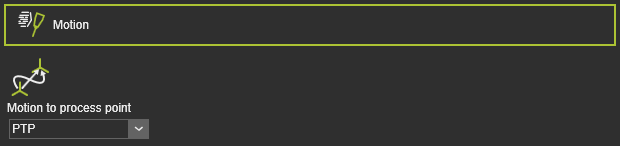 | Die Bewegungsdefinition. |
| Bewegung zum Prozesspunkt | Der Bewegungstyp, mit dem das Werkzeug den Prozesspunkt erreicht. |
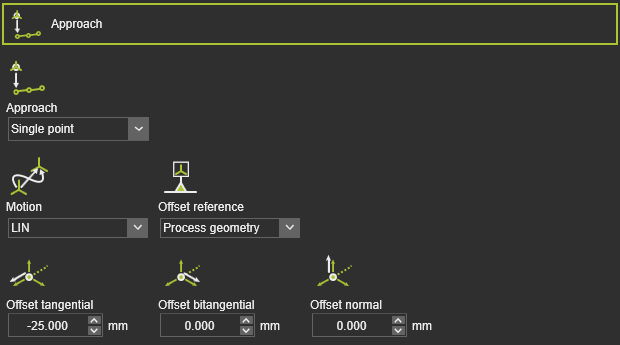 | Um eine Annäherungsbewegung an den Werkzeugweg im Prozess zu definieren. |
| Annäherung | Die Anzahl der Annäherungsschritte. |
| Bewegung | Der Bewegungstyp für die Annäherung. |
| Offset-Referenz | Die Referenz zur Bestimmung der Versatzrichtungen. |
| Tangentialer / bitangentialer / normaler Versatz | Der lokale Versatz des Anfahr-Schritts vom Start-Element des laufenden Werkzeugpfads. |
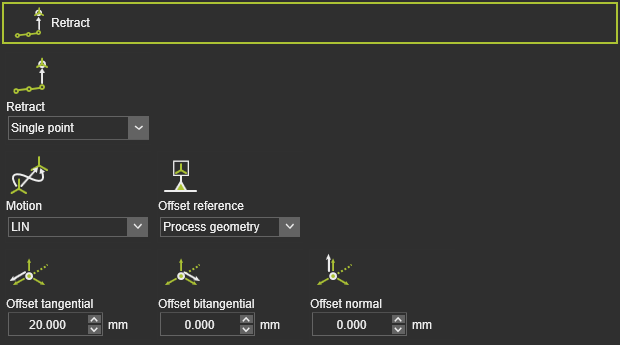 | Um eine Rückzugsbewegung vom aktuellen Werkzeugweg zu definieren. |
| Zurückziehen | Die Anzahl der Rückzugsschritte. |
| Bewegung | Der Bewegungstyp für den Rückzug. |
| Offset-Referenz | Die Referenz zur Bestimmung der Versatzrichtungen. |
| Tangentialer / bitangentialer / normaler Versatz | Zum lokalen Versatz des Rückzugsschritts vom Endelement des laufenden Werkzeugpfads. |
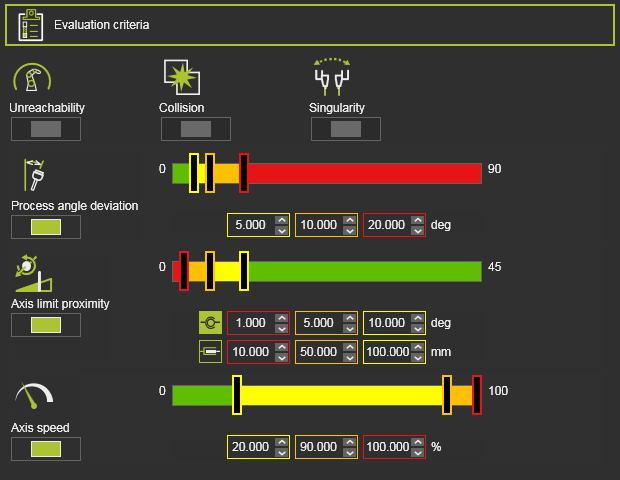 | Die Bewertungskriterien für die Werkzeugwegqualität. Der genaue Inhalt kann je nach Technologie variieren. |
| Unerreichbarkeit | Bewertet unerreichbare Situationen des Roboters oder der Maschine. |
| Kollision | Bewertet Kollisionen. |
| Singularität | Bewertet Singularitätssituationen des Roboters oder der Maschine. |
| Abweichung des Prozesswinkels | Bewertet die Abweichung des Prozesswinkels von seinem Referenzwert. |
| Achsnäherung an die Grenzwerte | Bewertet die Annäherung an die Grenzen der angetriebenen Achse. Getrennter Bewertungswertbereich für lineare und rotatorische Gelenkachsen. |
| Achsgeschwindigkeit | Bewertet die Achsgeschwindigkeit aller angetriebenen Achsen als (absolute) Differenz zwischen dem Start- und dem Endpunkt der Bewegung zwischen Positionen. |
Programmevents
Die generische Cavity Preservation-Technologie verfügt über die folgenden Programmevents:
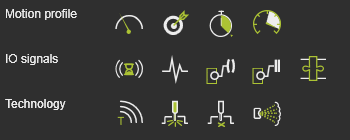
| Bewegungsereignisse | |
|---|---|
 Speed Speed | Legt die Geschwindigkeit für die nachfolgenden Bewegungen fest. |
 Accuracy Accuracy | Legt die Genauigkeit für die nachfolgenden Bewegungen fest. |
 Dwell Dwell | Legt eine Wartezeit am Pfadelement fest, während der das Werkzeug an der Position verbleibt, bevor es weiterbewegt wird. |
 Acceleration Acceleration | Legt die Beschleunigung für die nachfolgenden Bewegungen fest. |
| IO-Signalevents | |
|---|---|
 Wait for signal Wait for signal | Fügt ein Ereignis zum Warten auf ein Eingangssignal des aktiven Controllers hinzu. |
 Set signal Set signal | Fügt ein Ereignis zum Setzen eines Ausgangssignals des aktiven Controllers hinzu. |
 Synchronize robots Synchronize robots | Legt ein Ereignis fest, um kooperierende Roboter zu synchronisieren. |
 Set resource port Set resource port | Legt einen Port einer Ressource fest. |
 Wait for resource port Wait for resource port | Wartet auf einen Port einer Ressource. |
 Adapter actor Adapter actor | Setzt ein Signal eines mechanischen übergeordneten Adapters, um während der Simulation eine mechanische Verbindung zu erstellen oder zu löschen. |
| Technologieereignis | |
|---|---|
 Text Text | Fügt einen Kommentar ein. |
 Gun on Gun on | Aktiviert die Dispersionsvorrichtung. |
 Gun off Gun off | Schaltet die Dispersionspistole aus. |
 Brush Brush | Legt die Dispersionsbürste fest. |
Prozesssimulationsmodelle
Die Technologie zur Kavitätserhaltung umfasst die folgenden Prozessmodelle:

