Lichtbogenschweißnaht-Erkennung

Nahtdetektion
Im Lichtbogenschweißen ist es üblich, dass die Erkennung und Messung zur Kalibrierung der Schweißnaht durch eine Vielzahl von Berührungserkennungsmethoden erfolgt, die von den verschiedenen Roboterherstellern und Systemintegratoren bereitgestellt werden.
Das Lichtbogenschweißtechnologie-Paket umfasst eine Reihe dieser Methoden, die einen Satz standardisierter, generischer Parameter bis hin zu herstellerspezifischen Erweiterungen enthalten.
Berührungs-Erkennungsmethoden
Zwei Methoden sind implementiert:
| Methode | Beschreibung | |
|---|---|---|
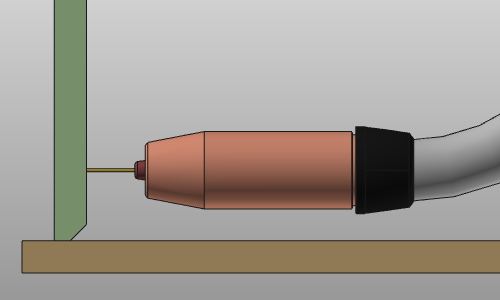
| Berührung mit Draht | Die Position des geschweißten Teils wird durch die Kollision zwischen dem Teil und dem Schweißdraht bestimmt. Abhängig von der Anzahl der zu eliminierenden Freiheitsgrade muss die Anzahl der Berührungen festgelegt werden. Die Kalibrierung der Teilposition erfolgt vor Beginn des Schweißprozesses. | 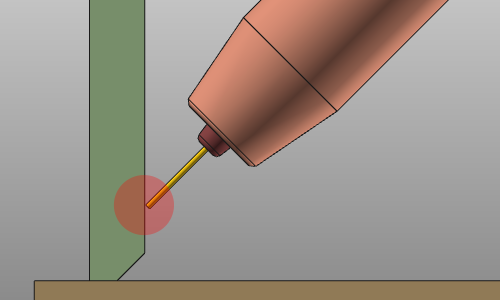 |
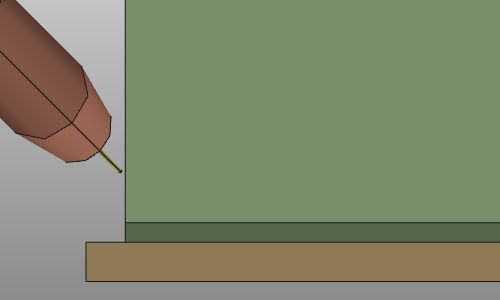
| Berührung mit der Düse | Die Position des geschweißten Teils wird durch die Kollision zwischen dem Teil und der Düse der Schweißpistole bestimmt. Abhängig von der Anzahl der zu eliminierenden Freiheitsgrade muss die Anzahl der Berührungen festgelegt werden. Die Kalibrierung der Teilposition erfolgt vor Beginn des Schweißprozesses. | 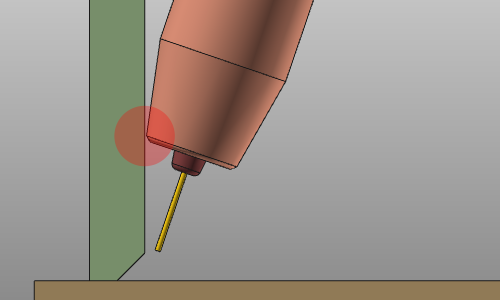 |
Berührungsrichtungen
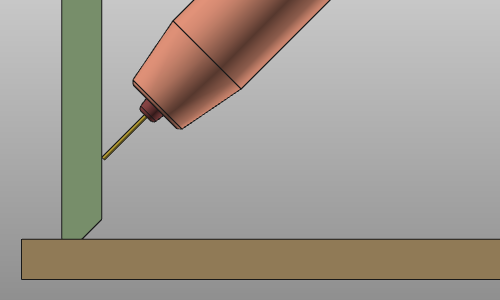
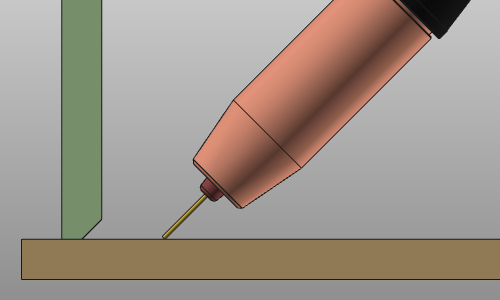
Grundsätzlich kann die Berührungserkennung in drei Richtungen angewendet werden:
| Arbeitsrichtung | Werkzeugrichtung | Fahrtrichtung |
|---|---|---|
 |  |  |
Betriebszyklus
Der Berührungsbetrieb ist ein Zyklus mit einer festen Anzahl vordefinierter Positionen und Bewegungsverhalten. Die Düsenwinkel werden in den Programmierattributen festgelegt und während des gesamten Berührungsbetriebs beibehalten.
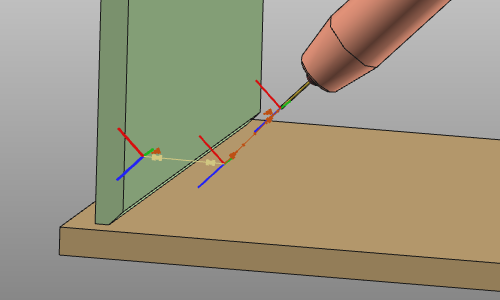
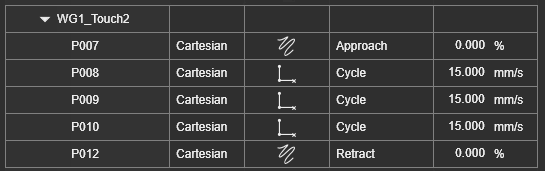
Der Zyklus umfasst die folgenden Positionen:
| Position | Beschreibung | Bemerkung | |
|---|---|---|---|
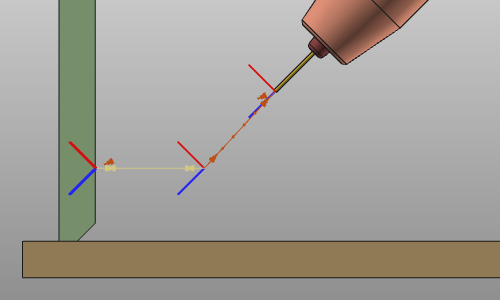 | Annäherung | Die Anfahrposition, von der aus der Berührungszyklus startet. | Optional. |
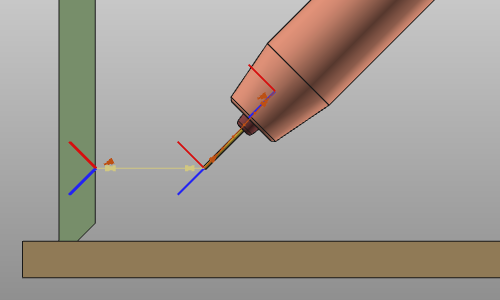 | Start | Die Startposition des Berührungszyklus. Diese Position wird als linearer Versatz vom theoretischen Berührungspunkt auf der Oberfläche berechnet, gemessen senkrecht zu dieser Oberfläche. | |
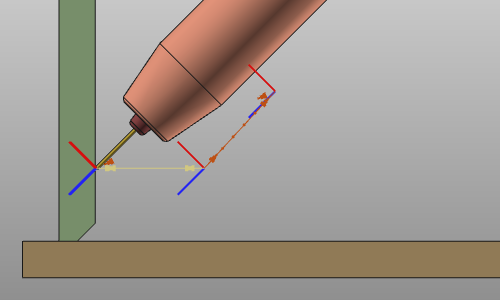 | Anschlag | The touch position. This position is a linear offset from the theoretical touch point and is determined from the collision of the welding torch with the welding part while moving from the start towards the theoretical position. 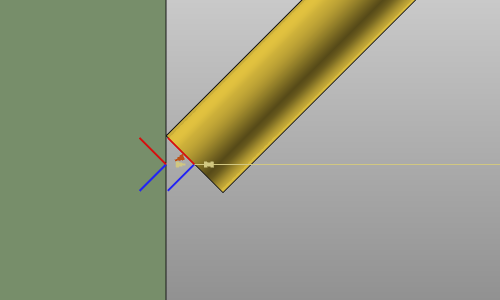 | |
| Zurück | Die Rückkehrposition des Berührzyklus. Die Position ist üblicherweise dieselbe wie die Startposition. | |
| Zurückziehen | Die Rückzugsposition vom Ende des Berührzyklus. | Optional. |
Bei Verwendung der Touch-by-Wire-Methode kann der Vorgang optional um einen Drahtprüfzyklus erweitert werden. Bevor der Drahtkontakt ausgeführt wird, fährt die Brennerdüse in normaler Richtung zum Berührungspunkt, um das Vorhandensein des Schweißdrahts zu überprüfen. Der Zyklus ist eine einfache lineare Bewegung zwischen der Start- und der Berührungsposition und zurück.
| Position | Beschreibung | |
|---|---|---|
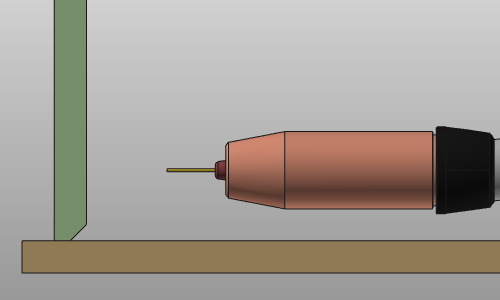 | Start | Die Startposition des Berührungszyklus. Die Ausrichtung der Schweißbrenner wurde senkrecht zur berührten Oberfläche eingestellt. |
 | Prüfen | Die (theoretische) Berührposition, die auch für die Drahtprüfung verwendet wird. |
Berührungsattribute
Im Register „Technology base tech“ der Programmier-Standardeinstellungen muss festgelegt werden, welche Positionsdefinitionssequenz angewendet wird.
| Sequenz | Beschreibung | Bemerkung | |
|---|---|---|---|
 | Berührung durch Punktanzeige | Die Berührungspositionen werden durch Auswahl der Position an den Schweißteilen definiert. Basierend auf dem WYSIWYG-Prinzip berechnet die Mausposition die Koordinaten am Bauteil. | Für jede Berührungsrichtung kann eine beliebige Anzahl von Berührungspositionen definiert werden. |
Die Methode umfasst eine Reihe generischer Attribute zur Definition des Berührungsoperationszyklus. Weitere herstellerspezifische Attribute des Controllers können ebenfalls verfügbar sein, werden jedoch auf dieser Seite nicht beschrieben.
| Attribut | Beschreibung | Bemerkung | |
|---|---|---|---|
 | Erkennungstyp | The touch method, i.e. the part of the welding torch that is running into collision to detect the welding part:  Touch by wire Touch with nozzle Touch by wire Touch with nozzle | |
 | Berührungsabstand vom Start | Der Versatz von der Berührungsposition zur Startposition des Zyklus. | |
 | Erfassungsgeschwindigkeit | Die Geschwindigkeit während des Berührungszyklus. | |
 | Berührungs-Verbindungs-ID | Die Kennung des Berührungszyklus und der Kalibrierung. Definiert, welche Schweißvorgänge welche Berührungskalibrierung verwenden. | |
 | Drahtprüfung | Die Option, vor dem Berühren einen zusätzlichen Drahtprüfzyklus einzuschließen. | Nur anwendbar bei der Drahtdetektionsmethode. |
 | Differenzwinkel für die Berührung | Zusätzliche Drehung zur Anpassung des Düsenberührungswinkels. | Nur anwendbar bei der Düsen-Erkennungsmethode. |
